
What Attracts Mosquitoes into Your Home & Why Florida is a Mosquito Hotspot
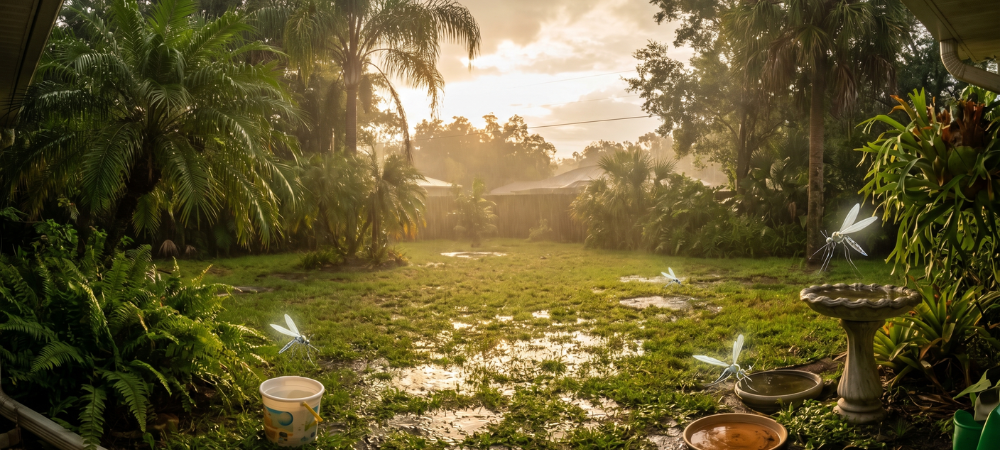
If you've ever spent an evening on your back porch in Central Florida and watched a mosquito land on you while the person next to you sits completely unbothered, you're not imagining things. Mosquitoes are selective and surprisingly sophisticated in who they target. Understanding what draws them in is the key to protecting yourself, your family, and your yard during Florida's long, brutal mosquito season.
First, Why Florida Is Such a Mosquito Hotspot
Central Florida doesn't just have mosquitoes; it has ideal conditions for them to thrive nearly year-round. The rainy season, which typically runs from June through October, fills up low spots, gutters, birdbaths, and even bottle caps with standing water. Mosquitoes need as little as a bottle cap's worth of still water to breed. With Florida's humidity, warmth, and frequent afternoon thunderstorms, a single backyard can support thousands of mosquitoes across multiple generations in a single summer.
There are more than 80 species of mosquitoes found in Florida, more than in almost any other state. The most common species you'll encounter in the Orlando and Central Florida area include Aedes aegypti (the yellow fever mosquito), Aedes albopictus (the Asian tiger mosquito), and Culex quinquefasciatus (the southern house mosquito). Each has slightly different behaviors, peak biting times, and disease risks, but they all respond to the same core set of attractants.
What Actually Attracts Mosquitoes to You
Carbon Dioxide — The Primary Signal
Every time you exhale, you release carbon dioxide (CO₂), and mosquitoes can detect it from surprisingly long distances — up to 100 feet in some conditions. CO₂ is the first signal that tells a mosquito there's a warm-blooded host nearby. This is why larger people, people who are exercising, and pregnant women (who tend to exhale more CO₂) often report getting bitten more frequently.
Your Body Heat
Once a mosquito gets within range, body heat takes over. Mosquitoes use thermal sensors to zero in on exposed skin and the blood vessels close to the surface. After physical activity or on a hot day, your body temperature is elevated, making you more detectable and more appealing. This is one reason mosquitoes seem to go straight for you the moment you step outside after a workout.
Sweat and Skin Chemistry
This is where things get personal, literally. When you sweat, your body releases lactic acid, ammonia, and other compounds through your skin. Lactic acid, in particular, is a powerful mosquito attractant. Research from Florida International University found that an olfactory receptor called Ir8a is responsible for roughly 50% of mosquito host-seeking behavior, and it's keyed specifically to detecting these sweat-derived compounds. Some people naturally produce more lactic acid based on their genetics, fitness level, and diet, which explains why some individuals genuinely are "mosquito magnets" while others in the same group barely get touched.
Your skin is also home to billions of microorganisms — your skin microbiome — that produce volatile compounds as byproducts. The specific makeup of your skin microbiome affects your overall scent profile and plays a measurable role in how attractive you are to mosquitoes. This is largely genetic and not something you can easily change.
Dark Clothing
Mosquitoes use vision to detect hosts at close range, and they're particularly drawn to dark colors like black, navy, and deep red because these colors stand out against the bright, sun-lit backgrounds of a Florida afternoon. Wearing light-colored, loose-fitting clothing doesn't just keep you cooler in the heat, it makes you slightly less visible to mosquitoes on the hunt.
Floral and Fruity Scents
Certain fragrances in perfumes, scented lotions, shampoos, and body sprays can attract mosquitoes. This isn't surprising because mosquitoes in their non-biting state feed on plant nectar, and floral scents mimic the signals they follow for feeding. If you're spending time outdoors in the evening, unscented or minimally scented products are the smarter choice.
Standing Water on Your Property
While standing water doesn't attract mosquitoes to you personally, it is the single most important factor in why your yard may have far more mosquitoes than your neighbor's. Female mosquitoes need still water to lay their eggs. A forgotten pot saucer, a clogged gutter, a low spot in the lawn, a child's toy left outside, all of these can become breeding grounds within days of a Florida rainstorm. Eliminating standing water is the highest-impact thing you can do to reduce mosquito populations on your property.
Common Myths Worth Busting
"Eating garlic or taking B vitamins repels mosquitoes." This is one of the most persistent myths in the pest control world. According to researchers at the University of Florida's Institute of Food and Agricultural Sciences (UF/IFAS), there is no scientific evidence that consuming garlic, B vitamins, or any other food makes you less attractive to mosquitoes.
"Bug zappers will clear out mosquitoes." Studies have shown that UV-light bug zappers are largely ineffective against mosquitoes. They kill far more moths, beetles, and other non-target insects than mosquitoes. If your goal is mosquito control, zappers are not the answer.
"Bats and purple martins will eliminate mosquitoes from your yard." While bats and birds do eat mosquitoes, mosquitoes make up only a small portion of their diet. Relying on them for population control won't make a meaningful dent during peak season.
What You Can Actually Do to Reduce Mosquito Bites in Central Florida
In Your Yard
- Eliminate all standing water — dump, drain, or treat any container that holds water after rain. Check weekly during the rainy season.
- Keep gutters clean and flowing properly.
- Treat ornamental ponds, fountains, and birdbaths with mosquito dunks (Bti larvicide) to kill larvae without harming plants or pets.
- Keep grass trimmed and shrubs maintained — adult mosquitoes rest in dense vegetation during the heat of the day.
On Your Body
- Use EPA-registered repellents containing DEET, picaridin, or oil of lemon eucalyptus for proven protection.
- Wear light-colored, loose-fitting clothing that covers arms and legs during peak biting hours (dawn and dusk for most species; note that Aedes mosquitoes are aggressive daytime biters).
- Avoid outdoor activity immediately after rain when mosquito activity spikes.
For Your Home
- Make sure window and door screens are intact with no tears or gaps.
- Use fans on patios and outdoor spaces — mosquitoes are weak fliers, and fans disrupt their ability to land on you.
When DIY Isn't Enough
In Central Florida's climate, even the most diligent homeowners can find themselves overwhelmed by mosquito pressure, especially during the summer rainy season. Professional mosquito control services can address both adult mosquito populations (through targeted barrier treatments) and breeding sites (through larviciding) in a way that DIY products simply can't match. Recurring treatments timed to your property's specific conditions and the local mosquito activity calendar provide far more consistent protection than anything you can spray from a hardware store.
The Bottom Line
Mosquitoes aren't random; they're following very specific biological signals. Some of those you can control (what you wear, the standing water on your property, the fragrances you use), and some you can't (your genetics, your microbiome, how much CO₂ you exhale). The most effective approach combines personal protection with serious yard management and, for many Central Florida homeowners, professional mosquito control.
Don't let mosquitoes keep you inside this summer. Take control of your yard before peak season hits. Contact us for a free quote and learn about our seasonal mosquito control treatments for Central Florida homes.